The Alberta government has introduced a new funding model for municipalities with respect to policing services. Rural and municipal policing have inherent pain points that will never be resolved: there are only so many officers for remote regions, only so much money to go around, and that reality isn’t changing.
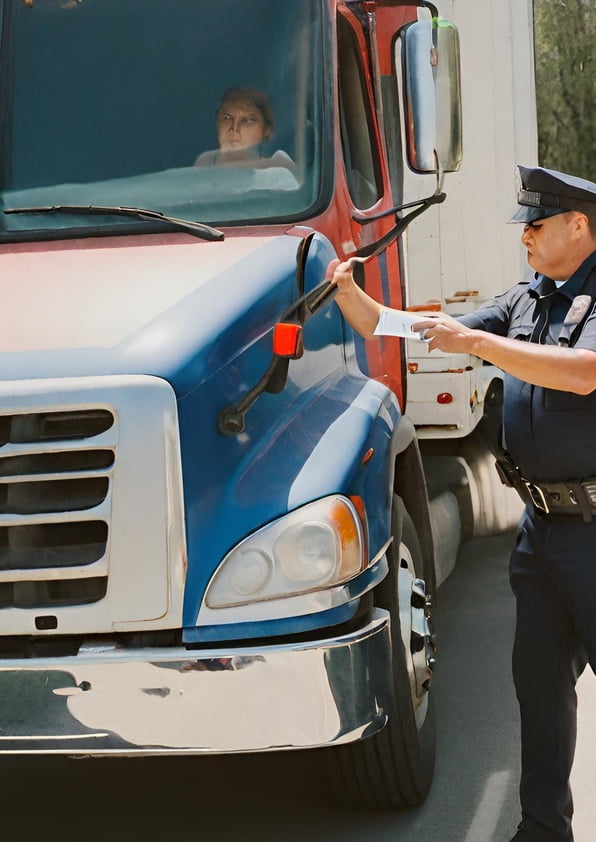
In my September 2024 blog, STOP Treating Tickets as a Cost of Doing Business, I talked about Alberta’s shifting enforcement landscape. Between the RCMP, sheriffs, bylaw officers, peace officers, the new Border Interdiction Team, and independent city police services, Alberta is crawling with new enforcement. Edmonton and Calgary both have dedicated commercial vehicle divisions with fully trained CVSA officers. The Interdiction Patrol Team has helicopters, drones, dogs, and guns.
All of this is very expensive. Calgary and Edmonton are tens of millions of dollars short in their policing budgets because of lost photo radar revenue — thanks for that, Maple MAGA Dreeshen.
How Police in Alberta Are Currently Funded
Short answer: It’s complicated.
1. Municipal Police Services (e.g., Calgary Police, Edmonton Police)
Funded primarily by municipal taxes, not the province or feds.
Main sources:
👉 Bottom line: Calgary Police and Edmonton Police are paid for by their cities, not by higher levels of government.
2. Provincial Police (RCMP contract policing in rural Alberta)
Funding split:
RCMP covers rural areas, small towns, and provincial highways.
3. Federal RCMP Units
Entirely funded by the federal government.
They handle national security, organized crime, border integrity, and financial crimes.
Municipalities do not pay for this.
The New Alberta Funding Model (April 2026)
Beginning April 1 2026, municipalities will pay a larger share of their own policing — without raising property taxes.
And how exactly do you think they’ll pull that off?
Commercial vehicles.
Because commercial vehicle enforcement is the most reliable revenue generator in the game.
Violations are endless:
And remember, if a driver is overweight on multiple axles, an officer can ticket each axle separately, plus the overall weight. LinkedIn is full of officers proudly posting ticket stats adding up to thousands of dollars.
Throw in a few ELD violations and your town might finally be able to afford the armoured vehicle or tactical team the chief has been dreaming about.
Most carriers don’t fight tickets because:
The government knows this.
It’s one reason some officers like to “pile on” violations — issuing multiple tickets for essentially the same offence under different regulations.
And when that well starts to dry up, there’s always the “chicken tickets”: tint, exhaust, and the Wetaskiwin special — obscured or faded licence plate under TSA AR320/2002 s.71(1).
Alberta had an entire bad batch of plates for a decade. Instead of issuing a warning and a notice to replace the plate, the province quietly posted a notice on its website… and let enforcement go wild writing tickets for it.
What Wetaskiwin Has to Say
Josh Bishop, Reeve of Wetaskiwin County, said:
“We appreciate the government’s commitment to freeze the police funding model rate and consult with municipalities. The proposed five-year transition provides the budget predictability municipalities require. This approach acknowledges the increased costs of policing and allows us time to adjust without forcing immediate, severe tax hikes on our residents.”
Of course he appreciates it — Wetaskiwin has more shitty plates than anywhere else in Alberta from the number of tickets they write. They can ride that revenue wave all the way into the sunset.
And Don’t Forget the Coming Alberta Police Force
The pressure on commercial carriers will only intensify when Alberta moves to its own provincial police service. Hopefully it gets a cool name like Alberta Rapid Force or The A Team.
And yes — Alberta is actively recruiting globally.
The Law Enforcement Pathway under the Alberta Advantage Immigration Program is designed to attract police officers from abroad. In 2025, 20 nomination spots were available; 11 were already filled, with more than a hundred candidates waiting.
For the Record…
I’m not anti-enforcement. I’m anti-abuse-of-power.
Commercial vehicle enforcement is necessary in Alberta and across Canada. The industry cannot and does not police itself — and when left alone, it descends into chaos, as we’ve recently seen.
Municipalities need policing revenue. Fine.
But does it really have to come from window tint and plate tickets?
How about focusing on:
But that takes actual work.
And writing 20 chicken tickets in a day is so much easier — and better for bragging rights on Snapchat.